
Lessons From Research
Study links professional learning to impact on students’ civic literacy.
By Learning Forward
Categories: Outcomes, Research, Standards for Professional LearningOctober 2014

Read the remaining content with membership access. Join or log in below to continue.
Sed ut perspiciatis unde omnis iste natus error sit voluptatem accusantium doloremque laudantium, totam rem aperiam, eaque ipsa quae ab illo inventore veritatis et quasi architecto beatae vitae dicta sunt explicabo. Nemo enim ipsam voluptatem quia voluptas sit aspernatur aut odit aut fugit, sed quia consequuntur magni dolores eos qui ratione voluptatem sequi nesciunt. Neque porro quisquam est, qui dolorem ipsum quia dolor sit amet, consectetur, adipisci velit, sed quia non numquam eius modi tempora incidunt ut labore et dolore magnam aliquam quaerat voluptatem.
At A Glance
A randomized control study of professional development for humanities teachers provides empirical evidence that teachers who experienced the planned intervention showed positive, significant impact on variables related to self-efficacy; satisfaction with professional support, engagement, and growth; and positive, significant impact on their 9th- and 10th-grade students’ historical understanding and four variables related to civic literacy.
The study
Barr, D., Boulay, B., Selman, R., McCormick, R., Lowenstein, E., Gamse, B., Fine, M., & Brielle, M. (in press). A randomized controlled trial of professional development for interdisciplinary civic education: Impacts on humanities teachers and their students. Teachers College Record, 117(4).
What This Means For The Practitioners
The professional development intervention, despite the impact on teachers and more limitedly for students, fails to meet all the Standards for Professional Learning at a high level. Had all standards been met at high levels, the results, particularly for students, might be more significant.
Standards the professional development intervention meets well: Resources, Learning Designs, and Outcomes. Intervention teachers had access to regional staff, print and digital curricular and instructional resources, and a stipend for participation in the summer program and for implementing the program.
The intervention program incorporated formal and informal learning designs and available ongoing support. Outcomes focused on teacher and student cognitive and affective changes associated with full engagement in civic life.
Standards the intervention meets weakly: Learning Communities, Leadership, Data, and Implementation. While teachers had access to online communities, they did not have the benefit of engaging in ongoing sustained communities of educators with collective responsibility for student success nor apply a cycle of continuous improvement to refine their practice and student learning.
Researchers engaged school leaders during the selection phase, yet not in the implementation of the program, nor did they address the systems and supports within schools for effective professional learning. Data were used to measure defined outcomes to answer the research questions, yet no student or teacher data were used to craft the specific professional development intervention.
Previous evaluation studies may have used data to identify specific areas of need, but there is no mention of how the intervention or researchers used data for needs analysis or ongoing implementation monitoring and adjustments.
Implementation support and expectations for accessing support were limited, and the actual implementation support provided was limited. This might account for the overall level of high-fidelity implementation at the teacher and classroom level.
The results of this research study might be even greater had the professional development intervention more intentionally incorporated and adhered to all Standards for Professional Learning.
Learning Forward is the only professional association devoted exclusively to those who work in educator professional development. We help our members plan, implement, and measure high-quality professional learning so they can achieve success with their systems, schools, and students.
Categories: Outcomes, Research, Standards for Professional Learning
CURRENT ISSUE
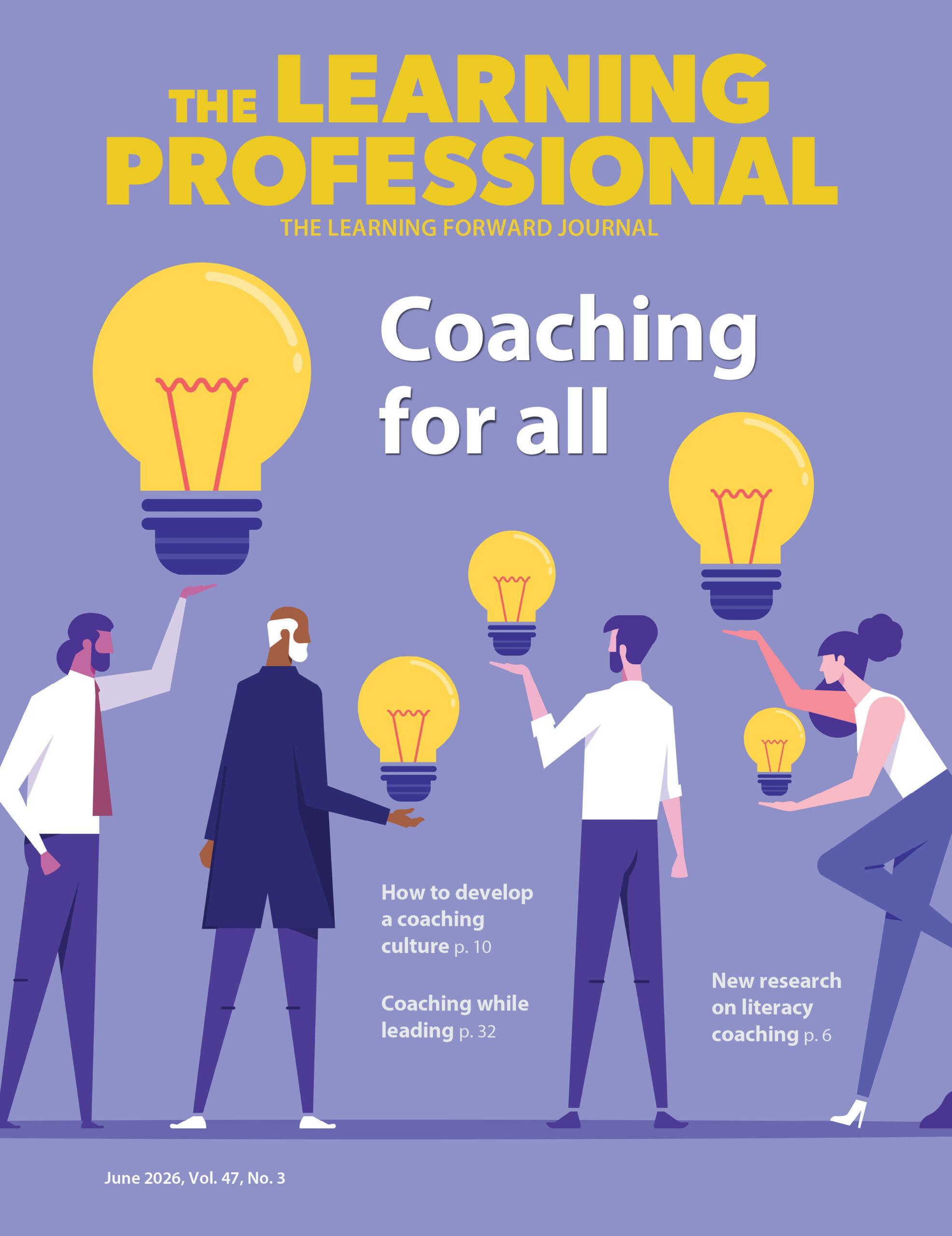
Recent Issues

APPLYING THE SCIENCE OF LEARNING
April 2026
Cognitive science illuminates how people learn. This issue shows how...

LEARNING WITH AI
February 2026
Generative AI can be a powerful tool for professional learning design and...

WHAT STUDENTS NEED NOW
December 2025
For all students to thrive, we need to understand who they are and what...
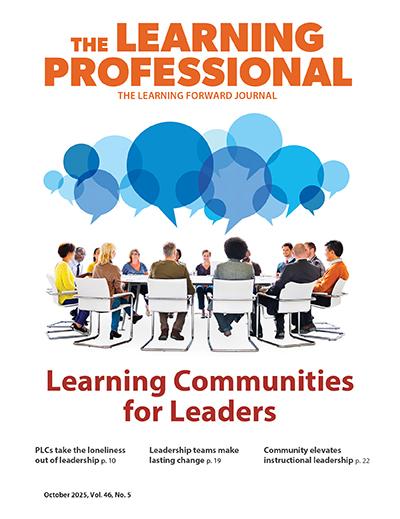
LEARNING COMMUNITIES FOR LEADERS
October 2025
Leaders need opportunities to connect, learn, and grow with peers just as...
