
VOICES
Ask
How do we clarify coaches' roles and responsibilities?
By Thomas Manning
August 2017

Vol. 38 No. 4
Learning Forward receives more inquiries about support for instructional coaches than any other consulting service we provide. School-based instructional coaching has the power to influence teacher practice, student learning, and school culture, and coaches play an essential role in ensuring the continuous learning of everyone in a school. In many systems, coaches are master teachers with substantial instructional and content expertise. These coaches, however, often lack deep expertise in professional learning. We work with instructional coaches to develop their skills in building relationships, leading professional learning, and providing individual and team coaching. Before we get to those skills, however, it’s important to understand the unique roles that instructional coaches play in what we call “learning systems.” In their book, Taking the Lead: New Roles for
Read the remaining content with membership access. Join or log in below to continue.
Sed ut perspiciatis unde omnis iste natus error sit voluptatem accusantium doloremque laudantium, totam rem aperiam, eaque ipsa quae ab illo inventore veritatis et quasi architecto beatae vitae dicta sunt explicabo. Nemo enim ipsam voluptatem quia voluptas sit aspernatur aut odit aut fugit, sed quia consequuntur magni dolores eos qui ratione voluptatem sequi nesciunt. Neque porro quisquam est, qui dolorem ipsum quia dolor sit amet, consectetur, adipisci velit, sed quia non numquam eius modi tempora incidunt ut labore et dolore magnam aliquam quaerat voluptatem.
References
Coaching Matters (Learning Forward, 2012): Each chapter in this book describes an element of what research and the authors’ firsthand experiences know it takes to make coaching effective.
Taking the Lead: New Roles for Teachers and School-Based Coaches (NSDC, 2006) Second edition coming later this year: Explore the complex, multifaceted roles played by teacher leaders and school-based coaches.
Standards for Professional Learning (Learning Forward, 2011): The standards define the essential elements of and conditions for professional learning if improvements in educator effectiveness and student learning are to be realized.

Tom Manning is an education consultant and former Senior Vice President of Professional Services for Learning Forward. For Learning Forward, he led the strategy, management, and business development for consulting and technical assistance services. He advanced Learning Forward’s vision by establishing and maintaining professional service partnerships with states, districts, and schools, and managed a cadre of more than 40 education consultants working across North America. He previously served as Learning Forward’s Associate Director of E-Learning, leading the design and implementation of the association’s online courses, webinars, and virtual learning communities. Prior to joining Learning Forward in 2009, he covered education as a reporter for the Houston Chronicle and Austin American-Statesman. He authored a chapter in the book Powerful Designs for Professional Learning (3rd ed.), and has been published in the Journal of Cases in Educational Leadership. Originally from Boston, Tom received a Bachelor of Arts in English and journalism from Texas Christian University.


CURRENT ISSUE
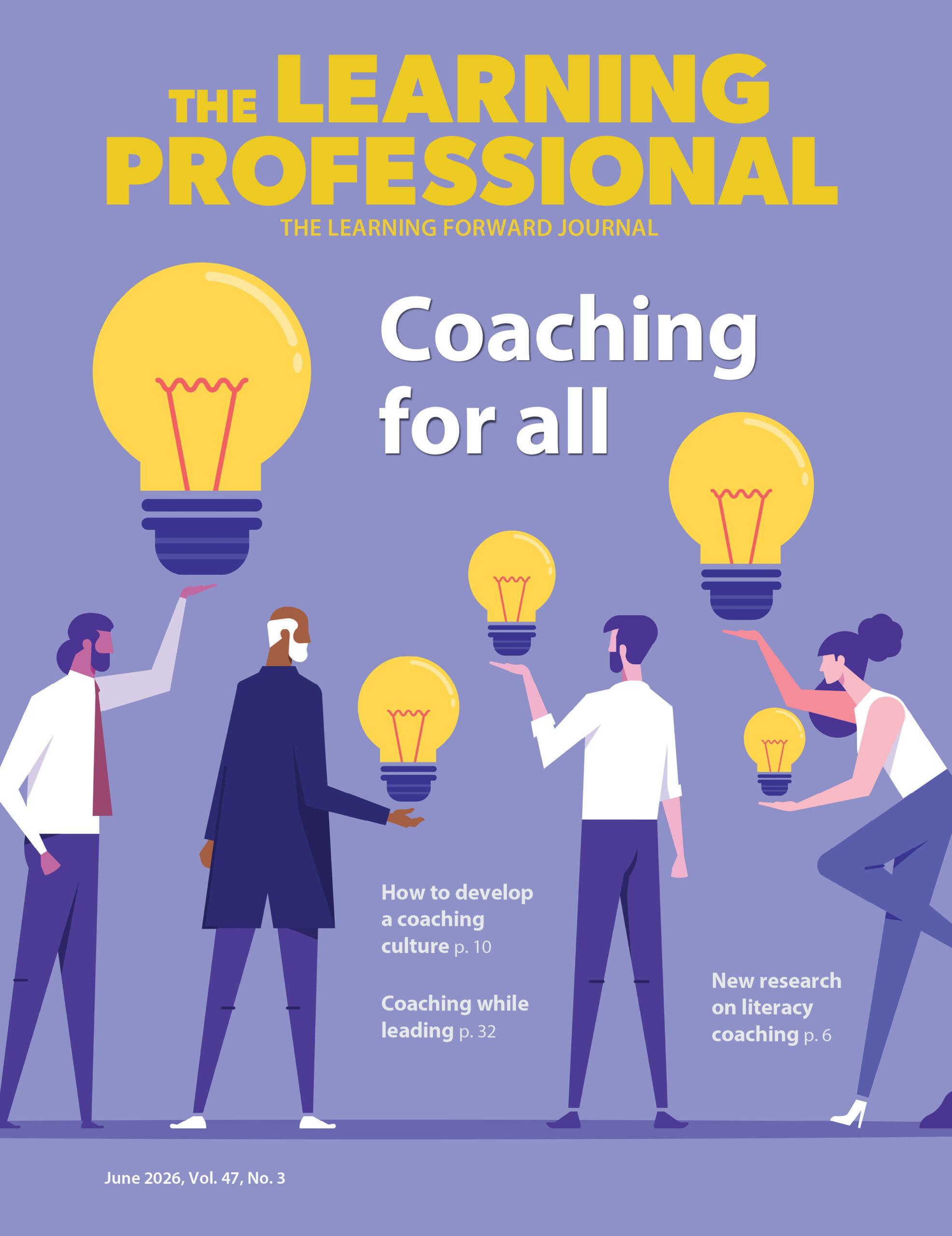
Recent Issues

APPLYING THE SCIENCE OF LEARNING
April 2026
Cognitive science illuminates how people learn. This issue shows how...

LEARNING WITH AI
February 2026
Generative AI can be a powerful tool for professional learning design and...

WHAT STUDENTS NEED NOW
December 2025
For all students to thrive, we need to understand who they are and what...
LEARNING COMMUNITIES FOR LEADERS
October 2025
Leaders need opportunities to connect, learn, and grow with peers just as...
